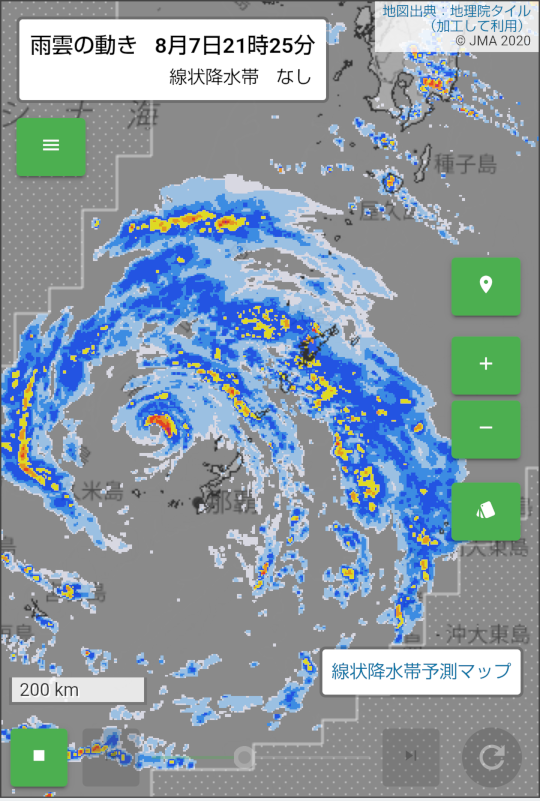
Last week (August 6-8), we were stuck by Typhoon Dolphin (日本語で台風13号) here in Kikaijima. Although typhoons grazed by Kumamoto when I was living there, this was the first time experiencing a real direct hit on this tiny island in the Pacific. Needless to say, the effects were a lot more severe. The typhoon at one point was at category 5 strength, but it passed by the Ryukyu Islands at category 1-2 strength. However, this was a monster storm that affected a large area. At its closest point, the eye of the typhoon was about 150 km from Kikaijima.

Not only was this storm really big, but it also did not move very fast. In fact, the eye did a bit of a dance and hovered just to the west of Okinawa for nearly a day. Even with this slow movement, it was noticeable that the wind directions were changing throughout the storm.
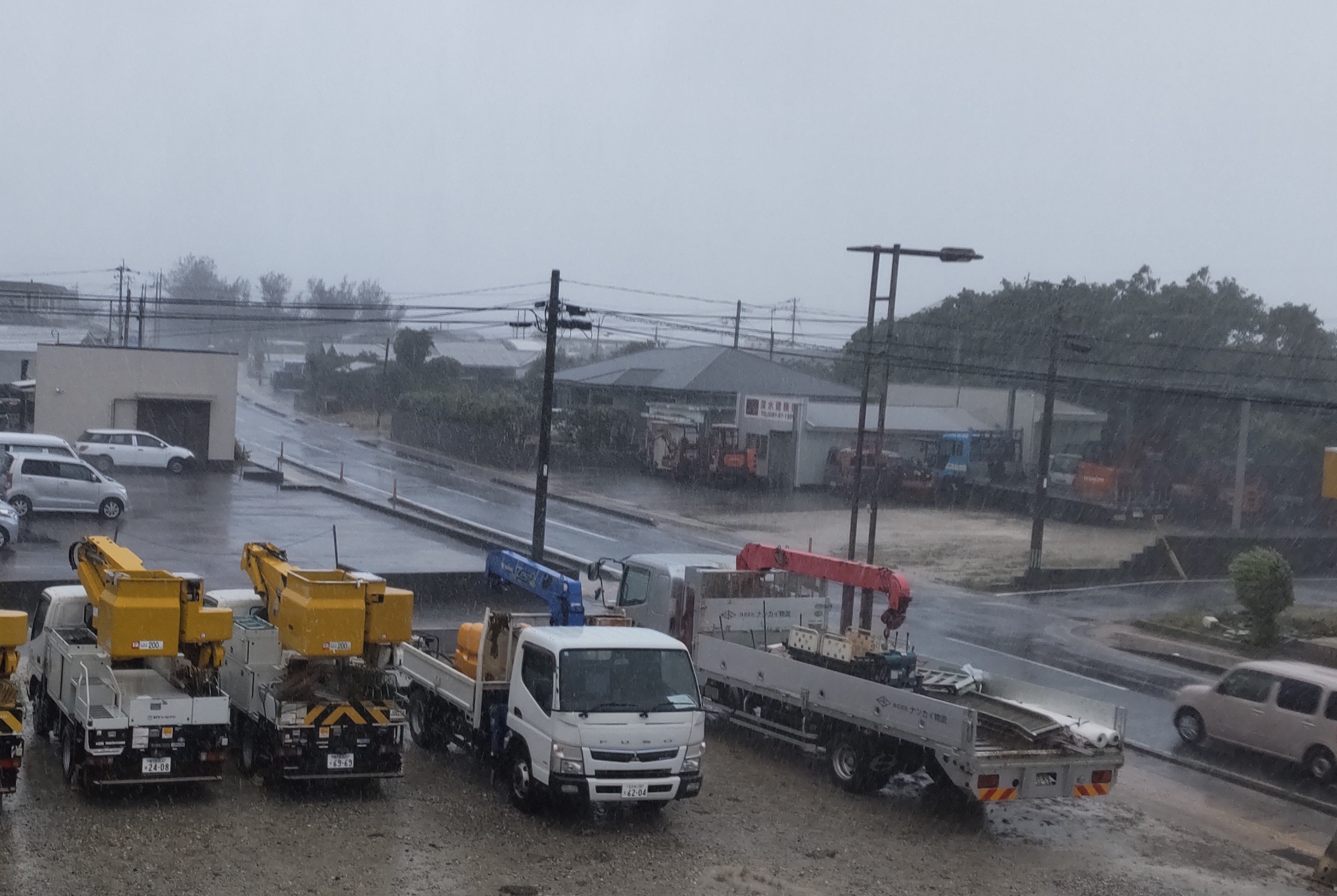
The typhoon hit with a lot of wind and rain, and I did not dare to go out. The power went out over the entire island at around 5:30 on the morning of August 7th. It was not restored until about 18:30 on August 8th, after the wind had died down quite a bit. It was a scary time, but I could watch the storm from my apartment without having the gusts getting into my room since it faced away from the wind.
The wind was very strong, and it has a strong impact on the island. The normally green hillside on the east side of the island was rendered brown as the leaves were stripped from the trees.

Right now, the Kikai Institute for Coral Reef Sciences is holding its summer school. The junior course, which was held last week, had to be moved forward because of the typhoon. We were able to wrap it up before the winds became severe. The advanced course, which runs this week, started on time, though some students’ arrivals were delayed.
Some of the students in our advanced course are interested in investigating fossils on the island, and we went out search at the coast of Kadon (located south of our institute) for Porites corals for sampling. This also gave us an opportunity to observe the size of the storm surge, as this was located on the east side of the island.
The surge reached pretty close to the seawall that protects the region around Kadon. The limit was almost 200 m from the coastline! One thing that is pretty clear is that there is a lot of plastic garbage in the ocean, which was washed up in the surge.


The power of the surge is exemplified by the fact that it broke off pieces of the fossil coral reef and moved large boulders around. One boulder, which definitely was moved in this storm because is was on the grass away from the fossil reef, was about a meter wide!


The fossil reef surface is pretty flat compared to what it looks like in the modern reef surface. It is pretty clear that after the terrace was uplifted due to tectonic activity, the storm surges provide a way to break off parts that are loose or sticking out.
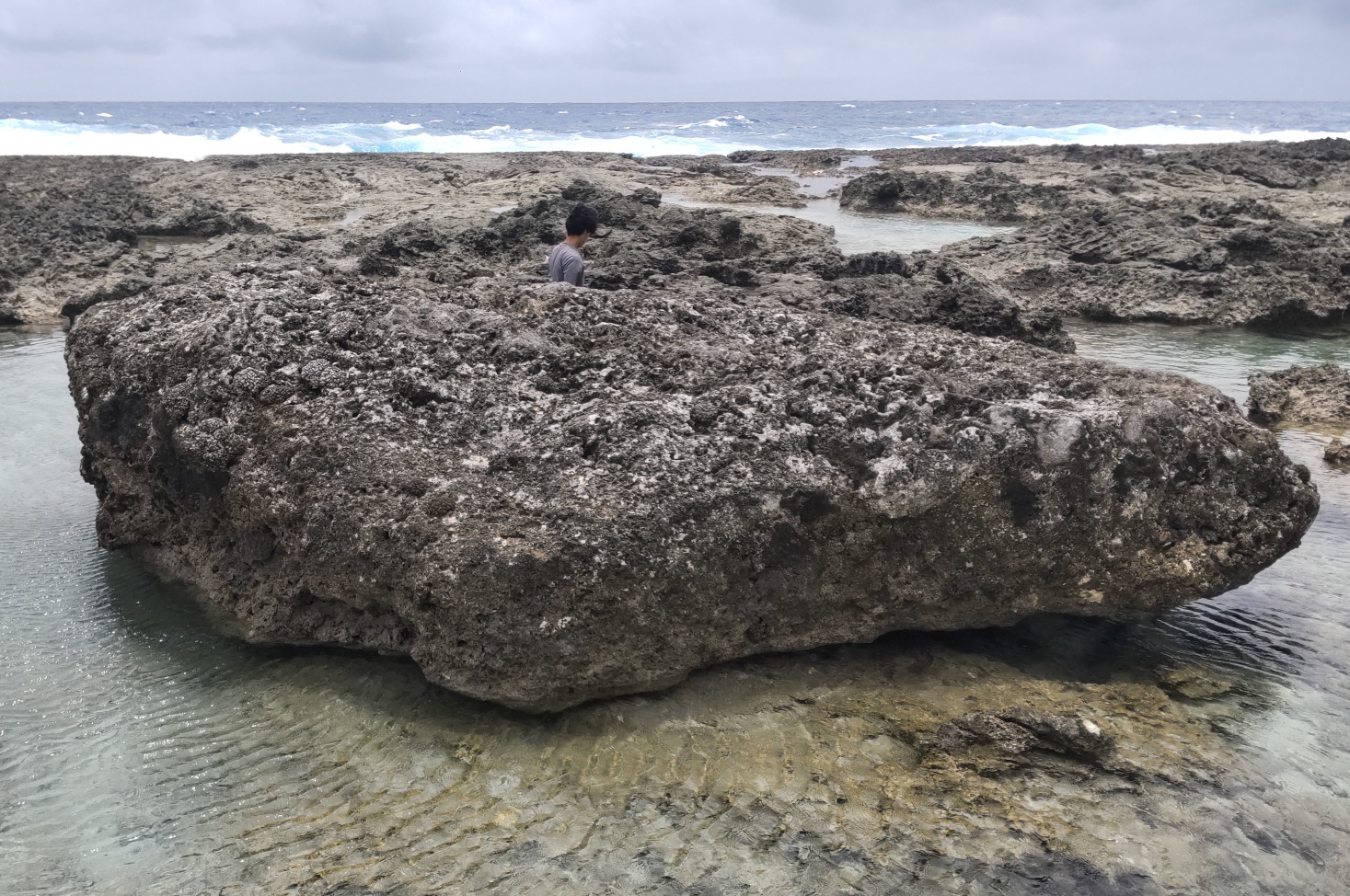
Perhaps most intriguing was this massive boulder that was several meters wide that had dead branching corals attached. The fragility of the branching corals indicates this boulder was pushed ashore recently. Since the corals have to live below the low tide mark, this had to have been transported at least 60 m from the current coastline. The condition of the dead corals suggests that the storm last week did not transport this boulder. My colleague suggested it might have been from a massive typhoon that hit the island 6 years ago. If I had access to good satellite imagery, I could find out.
 Raised Beaches
You must be logged in to post a comment.