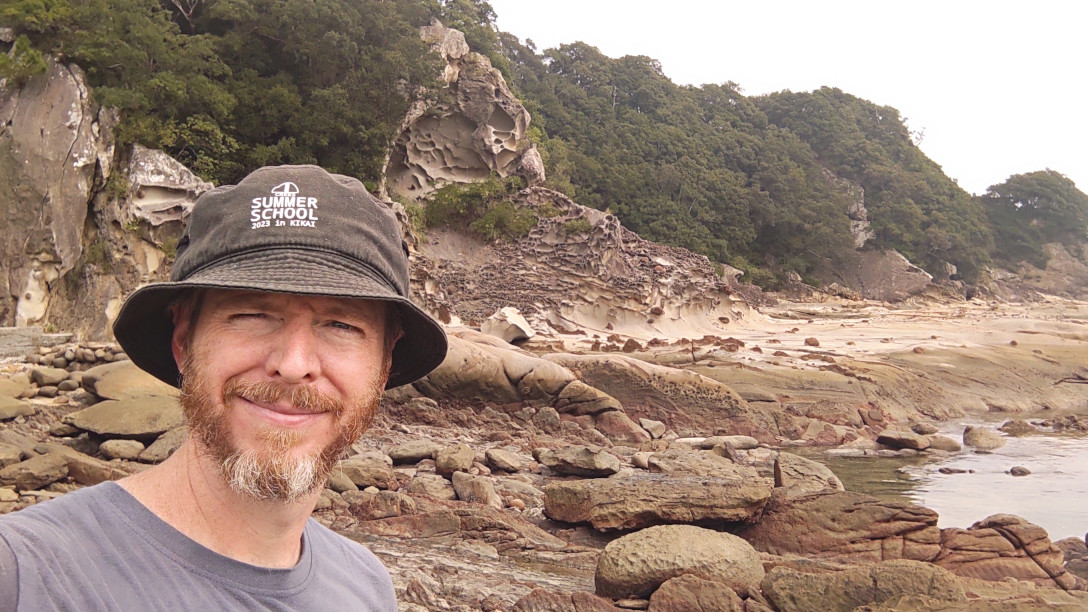
On day 7, we arrived at the Tosashimizu Geopark in southern Kochi Prefecture on Shikoku Island. Plenty of interesting geology! For me, this was a day of paleo sea level!
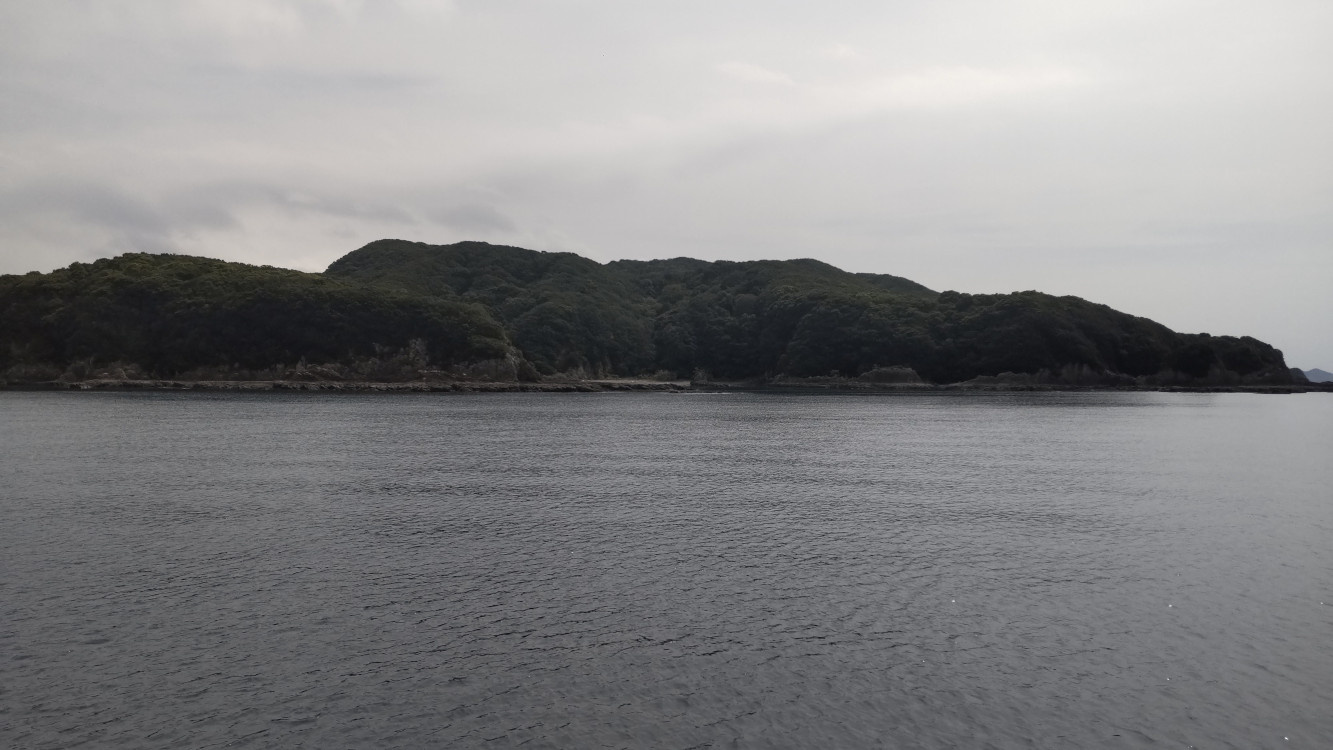
We made it to Shikoku in the morning of September 20th, reaching Ashizuri Port. As we came in the port, I was excited, because I immediately spotted an obvious raised terrace. Here is the closeup:
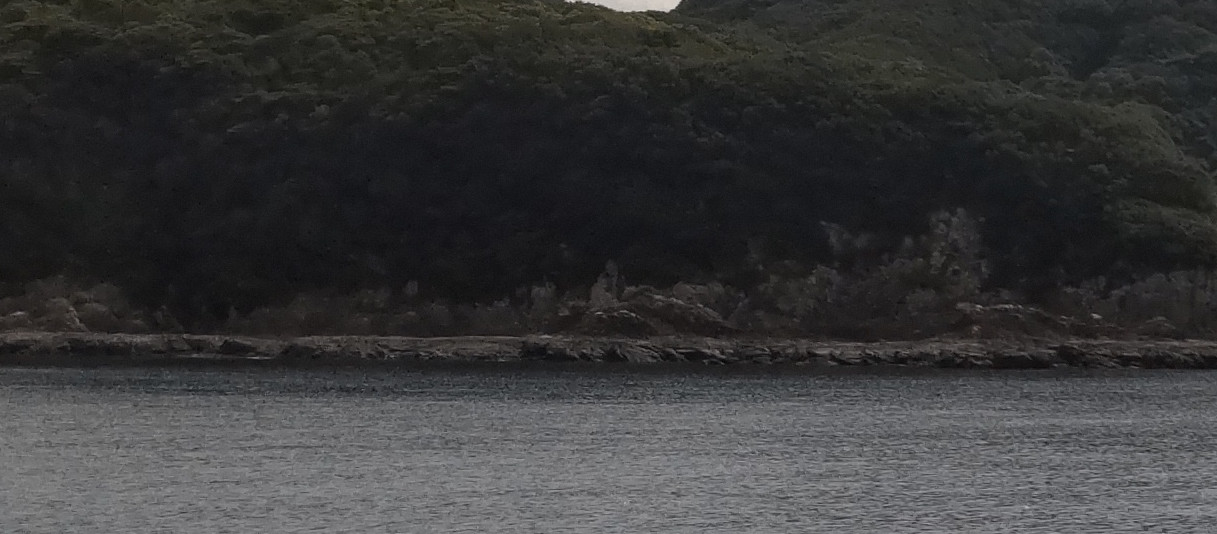
I, of course, had to find out the cause of this raised terrace. I found a paper by famed sea level scientist Paolo Pirazzoli in the 1970s. This terrace may have formed during the 1946 Nankai Earthquake. The power of the earthquake to lift up the land this much is hard to imagine.
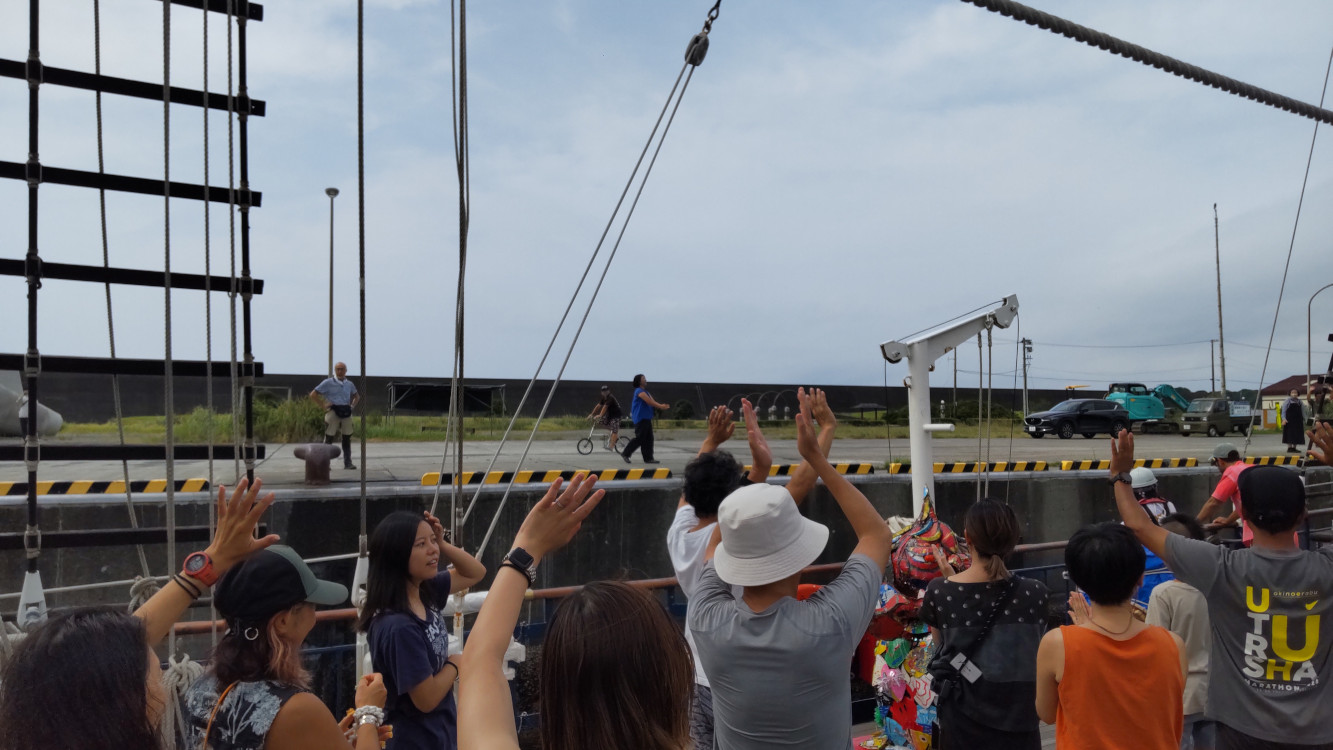
When were arriving at port, we got a great message from Yamazaki-san, who is the director of the Kikai Institute. She had left us at Yakushima, and made the long journey to meet us the next day in Kochi! Needless to say, everyone’s spirit was lifted by her greeting at the port!
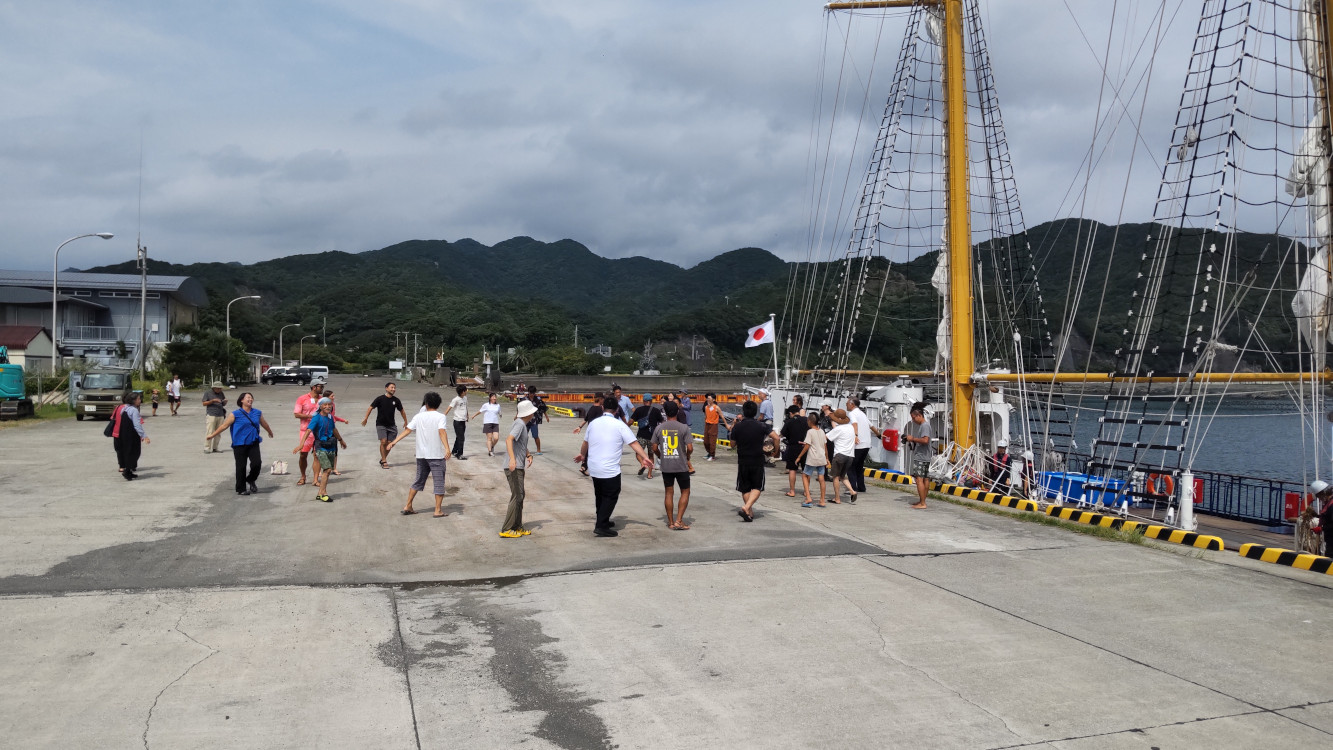
We celebrated our arrival with a traditional Kikaijima dance! We got pretty good at this dance by the end of the cruise!
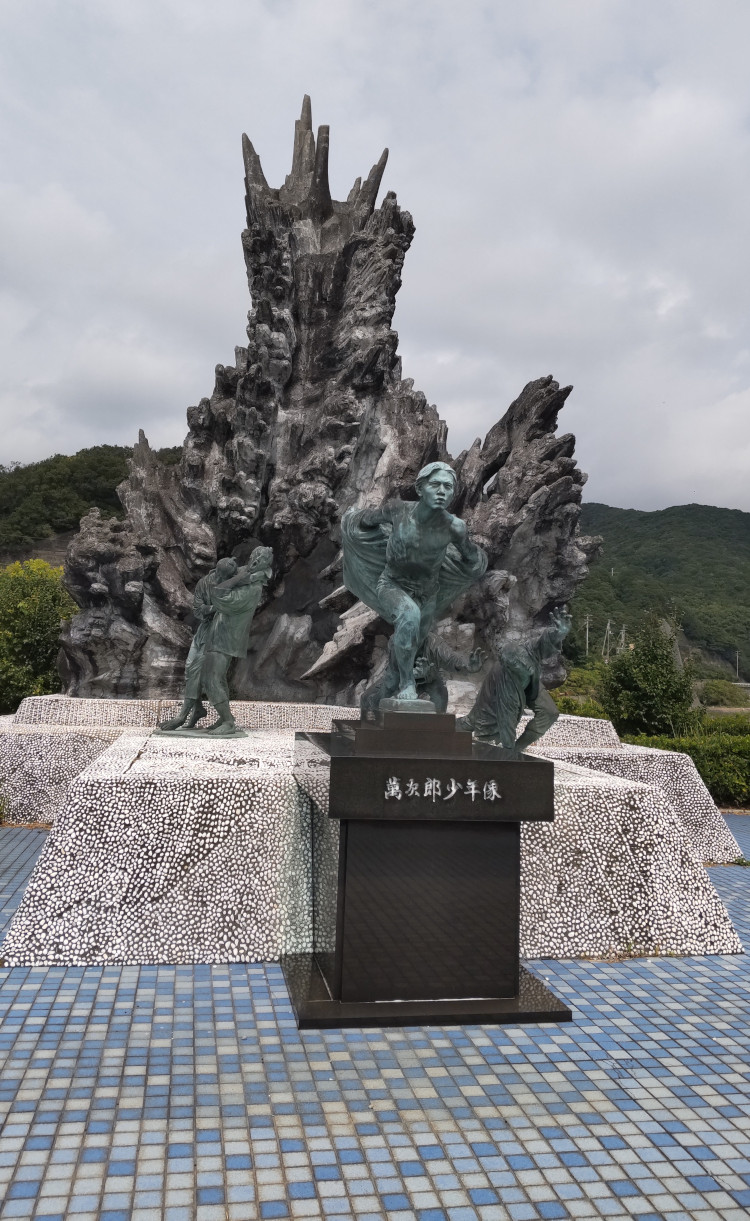
At the port was a museum for Nakahama Manjiro (also known as John Mung). Manjiro was from this region originally. When he was a teenager, he became shipwrecked on one of the Bonin Islands, and was eventually rescued by Americans. He went to America and learned English and became relatively wealthy as a sailor and from the California Gold Rush. He eventually returned to Japan just before the end of the Edo Period, when Japan was still isolated. He played a key role in introducing western concepts to the Japanese government as the Edo Period ended and became a professor at what is now Tokyo University. It is an incredible story, but we did not have time to go to the museum. I ran and got a shot of his statue, though.
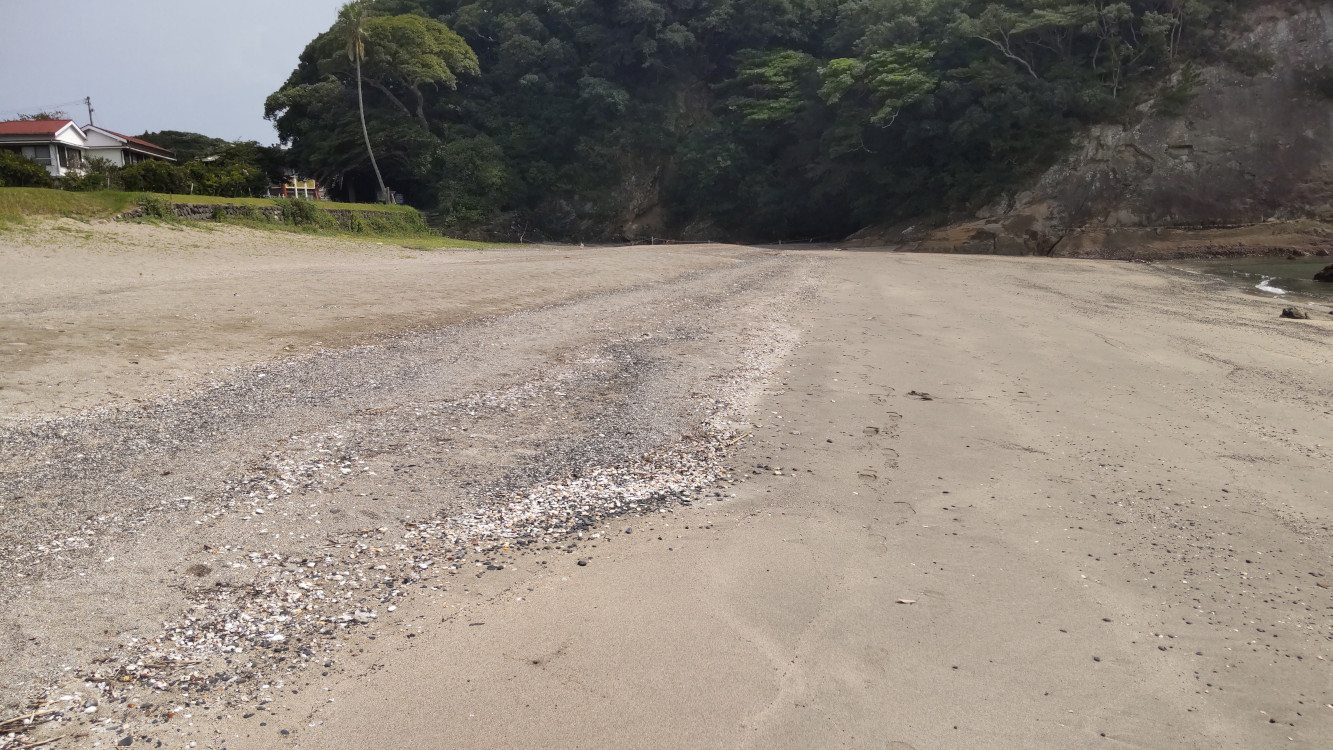
I was taken to the Tatsukushi Visitor Center, since my main task of the day was to give an online presentation to the Kikai Institute Sango Juku. I had a bit of time to explore around. The geology at the visitor center is quite remarkable.

I did not look up anything before I came to Kochi, so I was surprised to see corals on the beach. I learned after that the goal of this stop was to see how the coral reefs of Tatsukushi were developing. Things are looking good there!
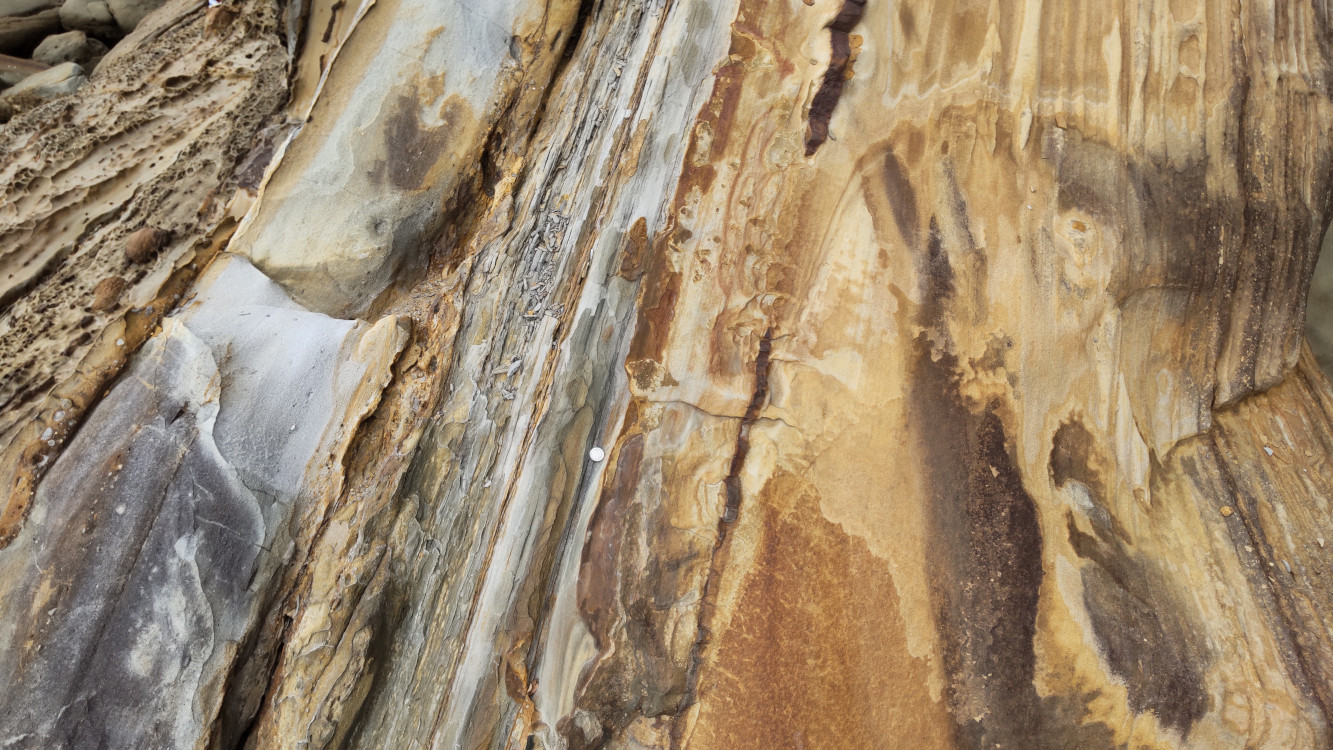
The rocks in Tatsukushi, mostly sandstones and shales, are Miocene in age (about 17 million years ago) and formed in a shallow sea. They have been uplifted and thrust in a vertical orientation in places.
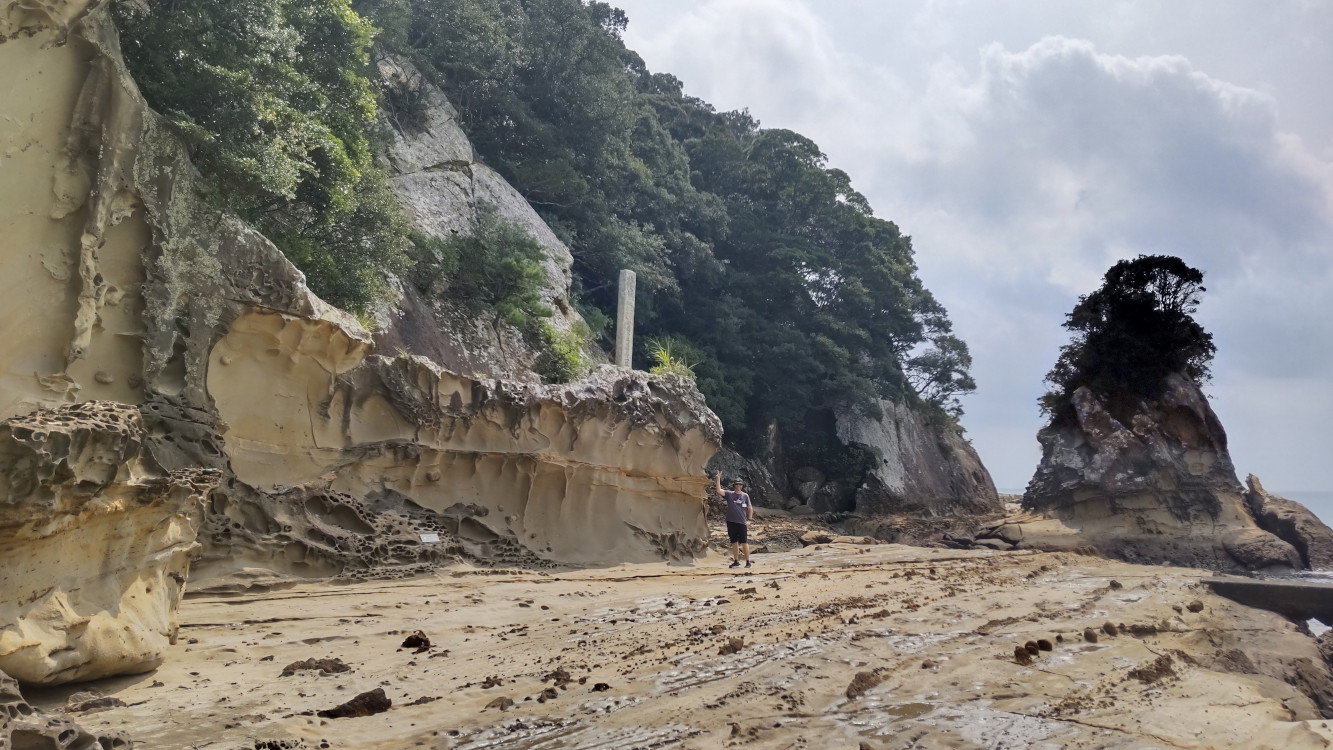
There is a prominent terrace at the Katsukushi visitor center that is well above current sea level. I asked at the visitor center if this was a result of the 1946 earthquake, and they said no, it was likely from the Holocene highstand. Pirazzoli, who did a lot of work on Japanese paleo-sea level, proposed that there was a Holocene highstand above present day sea level all around Japan. It is hard to prove, since places like Kochi (and of course, Kikaijima) are subject to fast uplift rates. I have seen evidence of higher sea levels in Sasebo, Nagasaki, which is assumed to be fairly stable, so this hypothesis seems likely. If my funding proposal I sent in back in September is successful, maybe I can look into this.
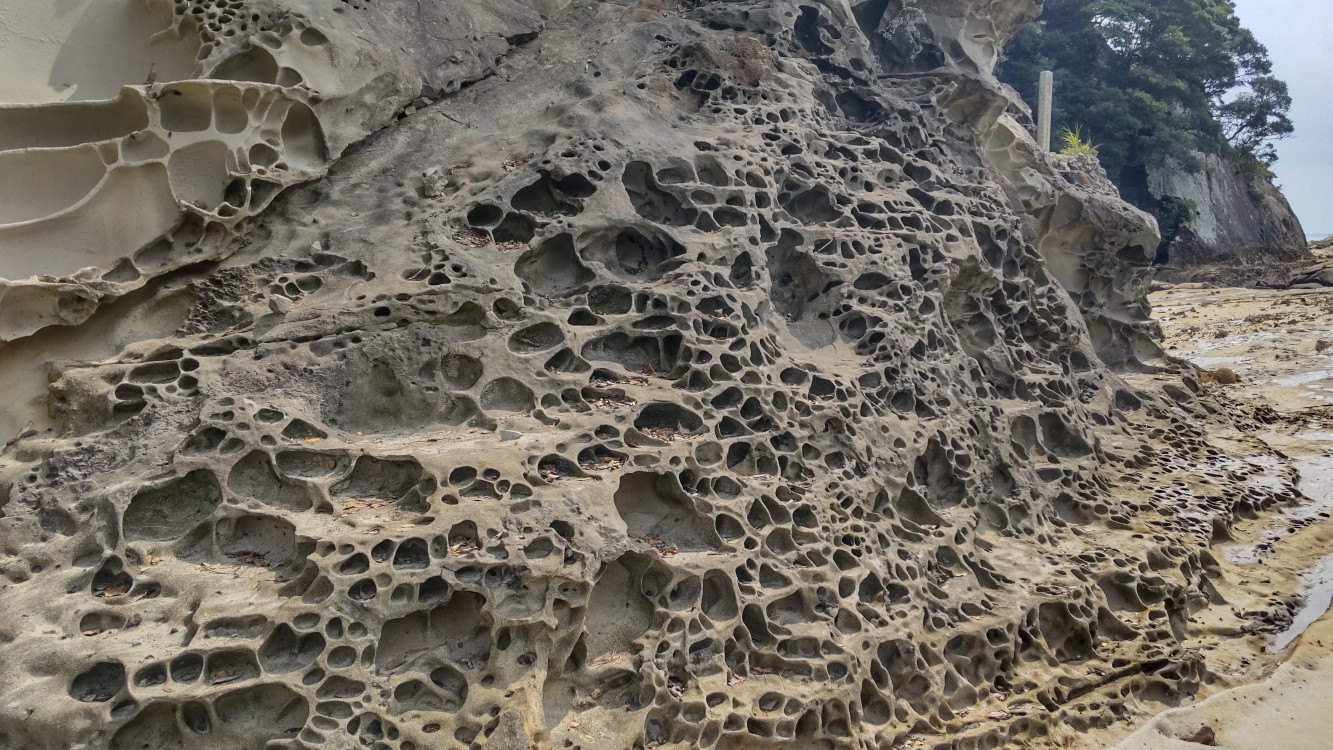
The cliff at the edge of the terrace has nice examples of honeycomb weathering. The cause of the weathering is not fully understood, but it is related to the salt from the ocean water.
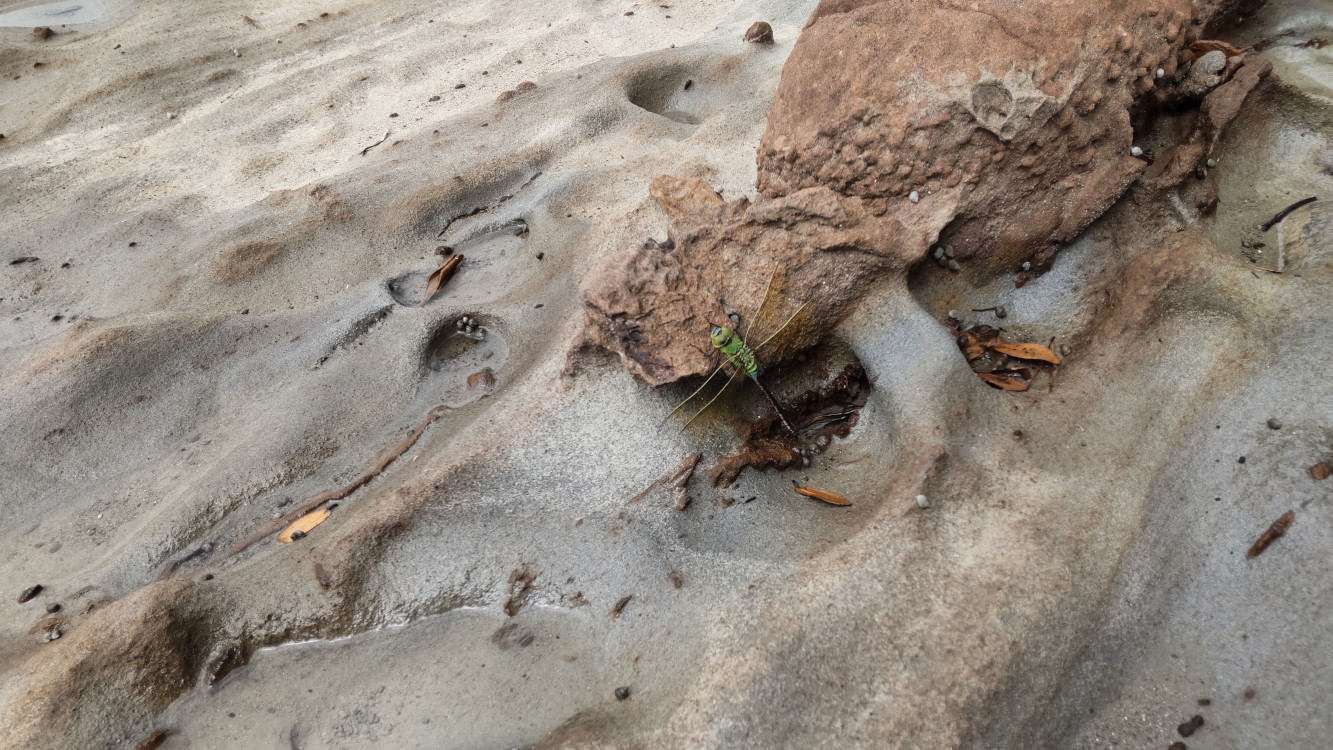
The Miocene sandstone has a lot of concretions in them. According to the visitor center, they often have fossils in them. This one had a beautiful green dragonfly perched on it.
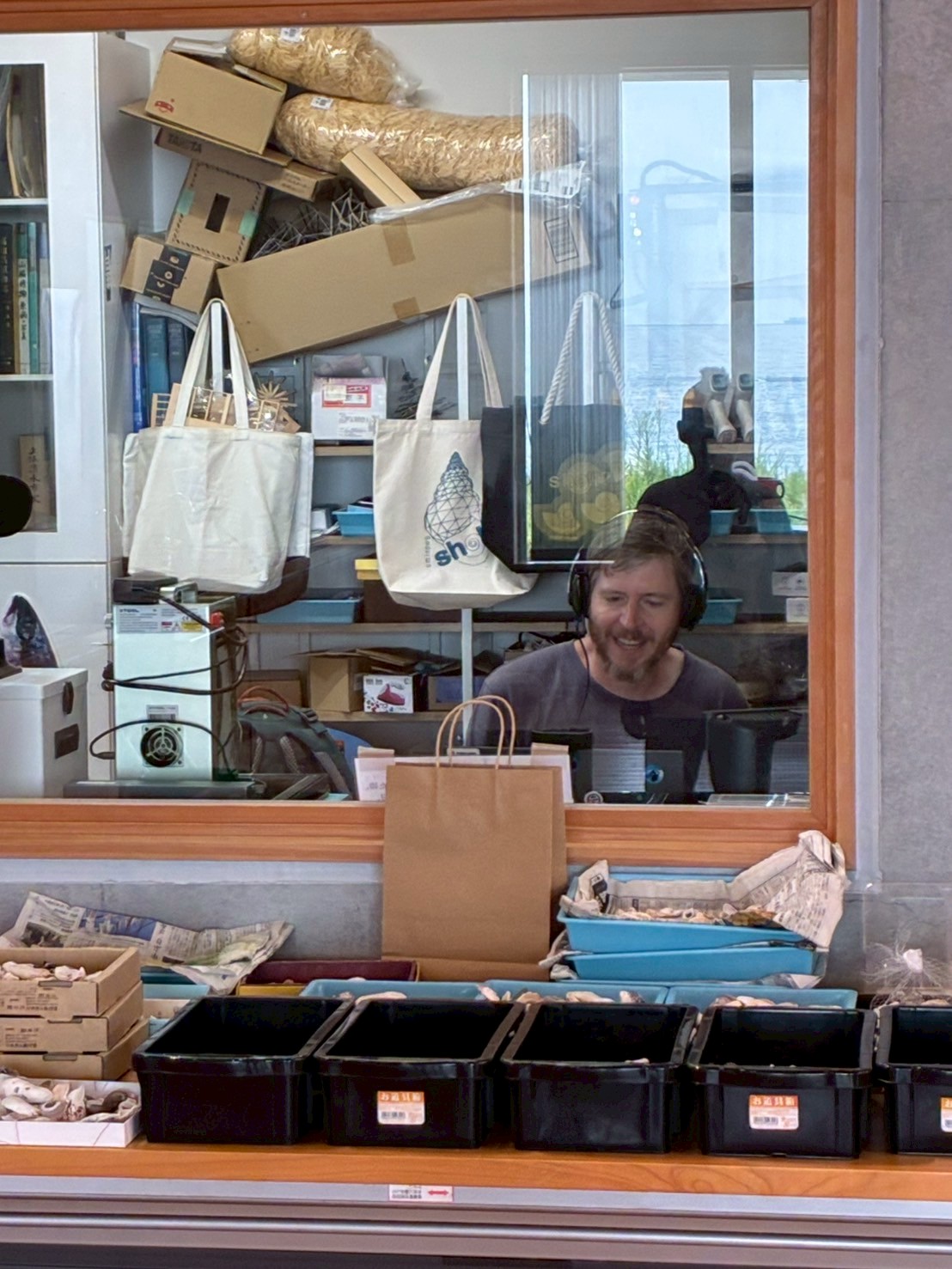
I couldn’t explore for too long. I had to give a presentation online to the Sango Juku (coral afterschool) class. It is a pleasure to talk about sea level with such a diligent group of kids. I gave the presentation at the Tastukushi visitors center. Many thanks to Katsumi Kato for taking this picture!

By 4 PM, we were on our way! There was not a ton of time after my presentation to look around, but I was able to get some local shochu.
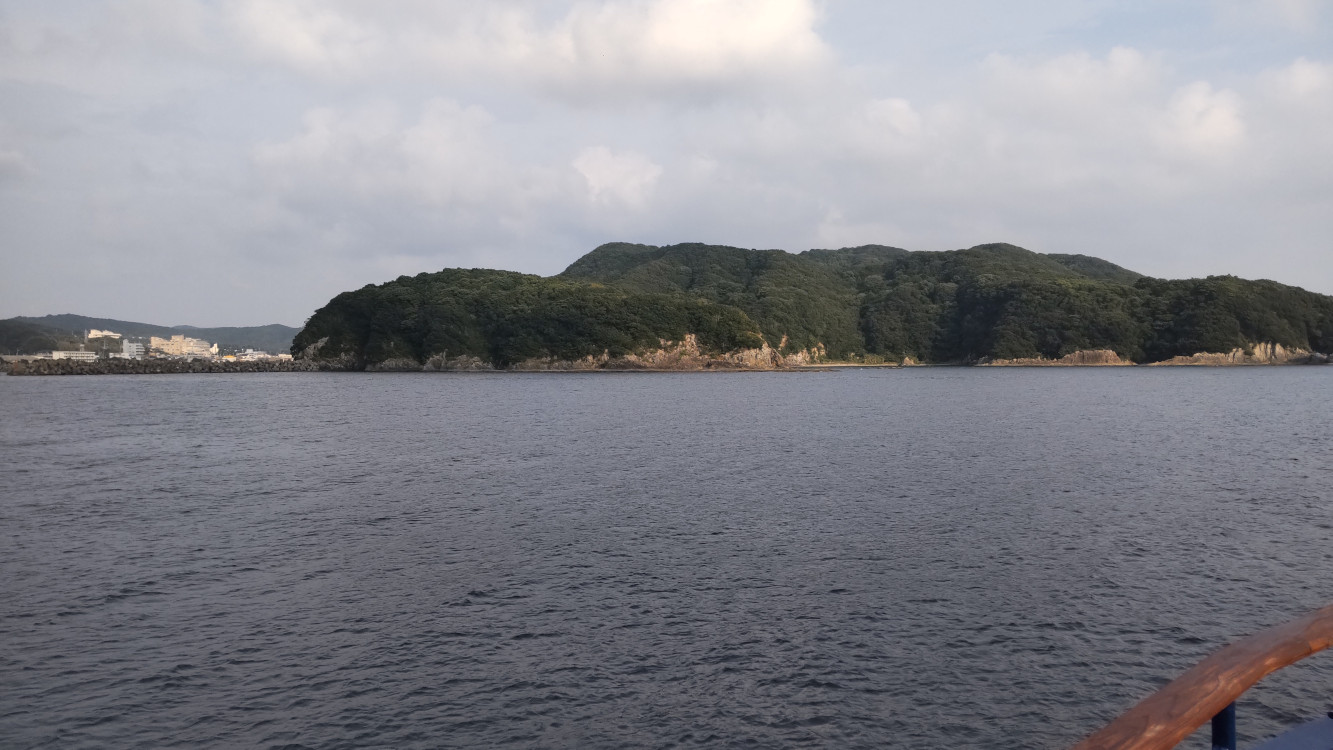
We weren’t done with the wave cut terraces, though. You can sort of make it out in this photo, the level surface at the top of the sea cliff. From my reading, this is likely a Last Interglacial (MIS 5e, ~120,000 year old) terrace.
The night ended with wonderful presentation by Professor Akira Goto on the relationship of constellation myths between different cultures. These myths may outlast even language families, which is interesting to think about in terms of human migration patterns towards the end of the last glacial period.
 Raised Beaches
You must be logged in to post a comment.