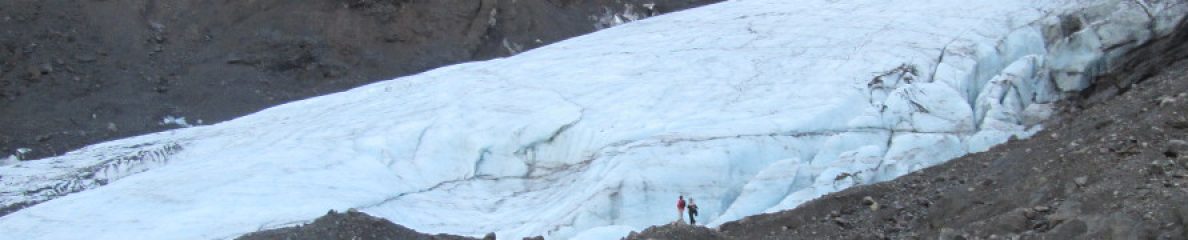

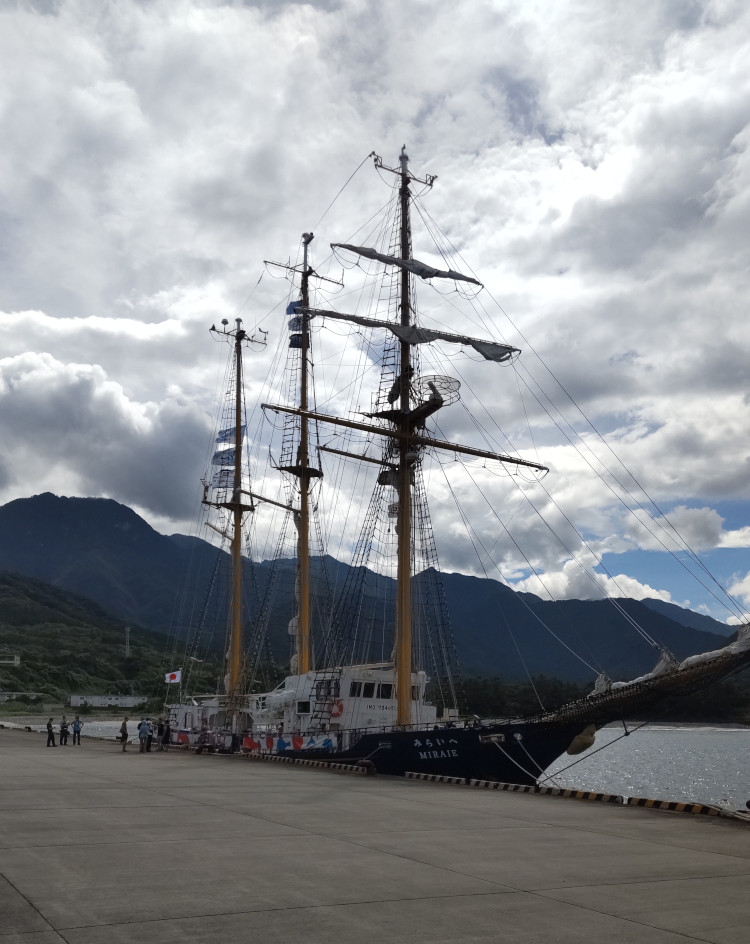
Day 5 of the cruise (September 18) began with us already at the port in Yakushima. It looked to be a beautiful day. We were connecting with local organizations working on monitoring the corals on the island.


One thing that interested me from the banner was that Yakushima, which is normally spelled as “屋久島” was spelled as “益救島”. This may be an old way of writing the name of the island. The kanji for Yakushima now is “屋” – store/house and “久” – long time (島 simply means “island”). The other way is “益” – benefit/profit and “救” – rescue. I have no idea why they changed it, because the old name seems more romantic.
Before we went stopped at Yaku Shrine (益救神社) to pray. It uses the old way of spelling the island!

Yakushima is basically a large mountain range sticking out of the water. In fact, if it is considered as part of Kyushu, it has the highest peak in Kyushu. The goal of our morning was to go to a trail in the mountains to see one of the famous Yaku Sugi (Japanese cedar) trees. The island is also famous for monkeys. We did see a bunch of them while we were driving, but I was unable to get a nice picture.
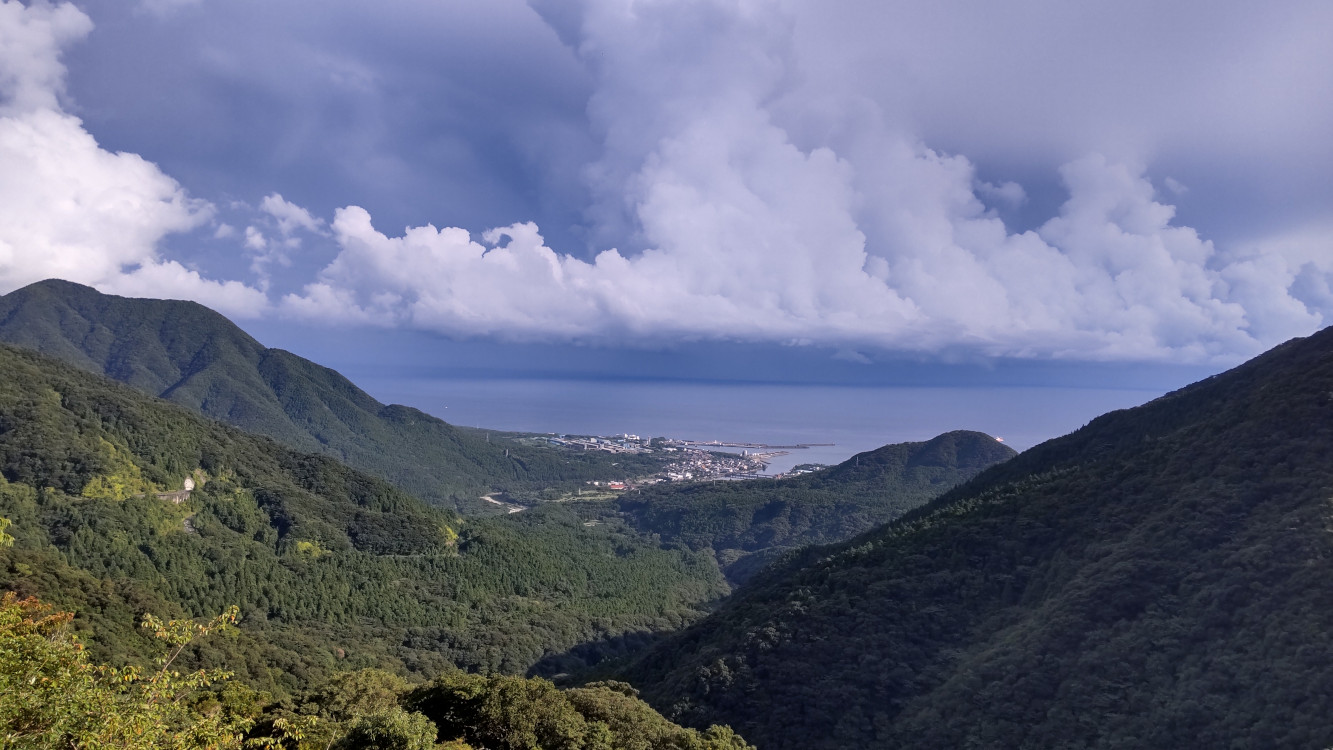
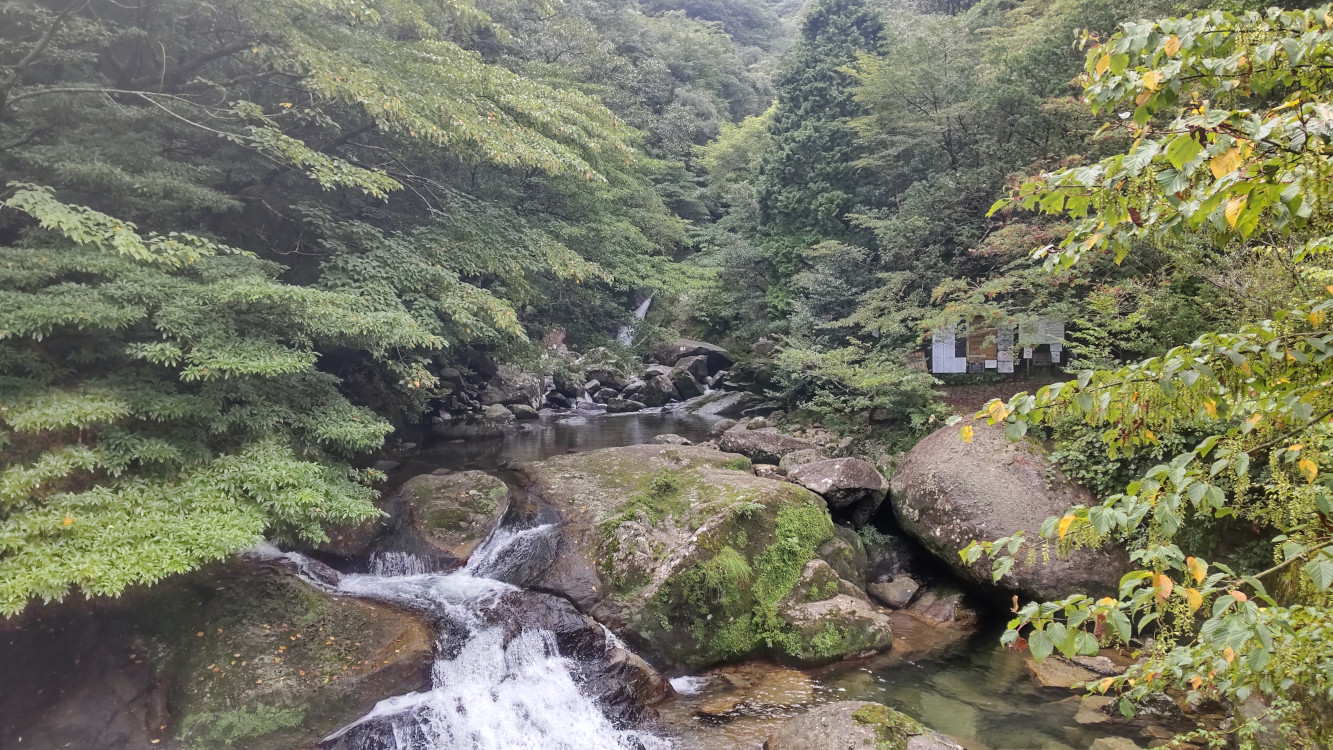
The picture below really encapsulates the nature in Yakushima. Rocks, trees and waterfalls. This was the second time I had been to Yakushima. The first time was in December 2015, and it was raining with much cooler weather. Even though the summer heat was persisting in September, high up in the mountain it was quite refreshing.
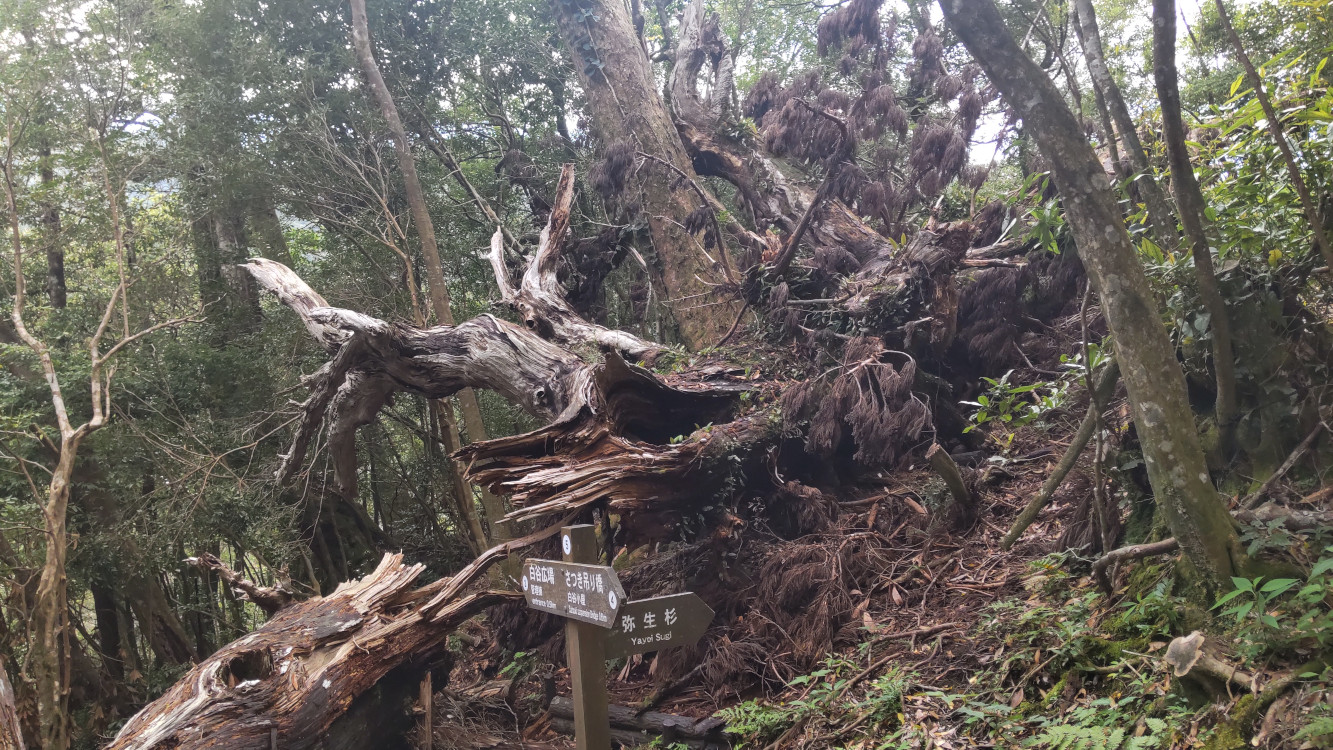
The main Yakisugi tree on this trail is the Yayoi Sugi. It was a tree that dates to the Yayoi period in Japanese history and was likely at least a couple of thousand years old. It was an inspiration for the movie Princess Mononoke. Unfortunately, the health of the tree had been in decline for several years, and it blew down in a typhoon in August 2024. They plan to let nature take its course and study how the fall of these massive trees impacts the ecosystem.
The core of Yakushima is a granitic batholith that formed during the Miocene (about 15 million years ago). Unlike most of the nearby islands, there is no volcano here. The granite rose up through the surrounding sediments (which we will see in the Day 6 post). The granite is characterized by large crystals of potassium feldspar (large crystals are known as phenocrysts). Showing my lack of geological knowledge, I said they were plagioclase feldspar crystals. I should have known better than to assume that (though to be fair, it has been 23 years since I took igneous petrology!). It can be hard to tell the different kinds of feldspar apart.

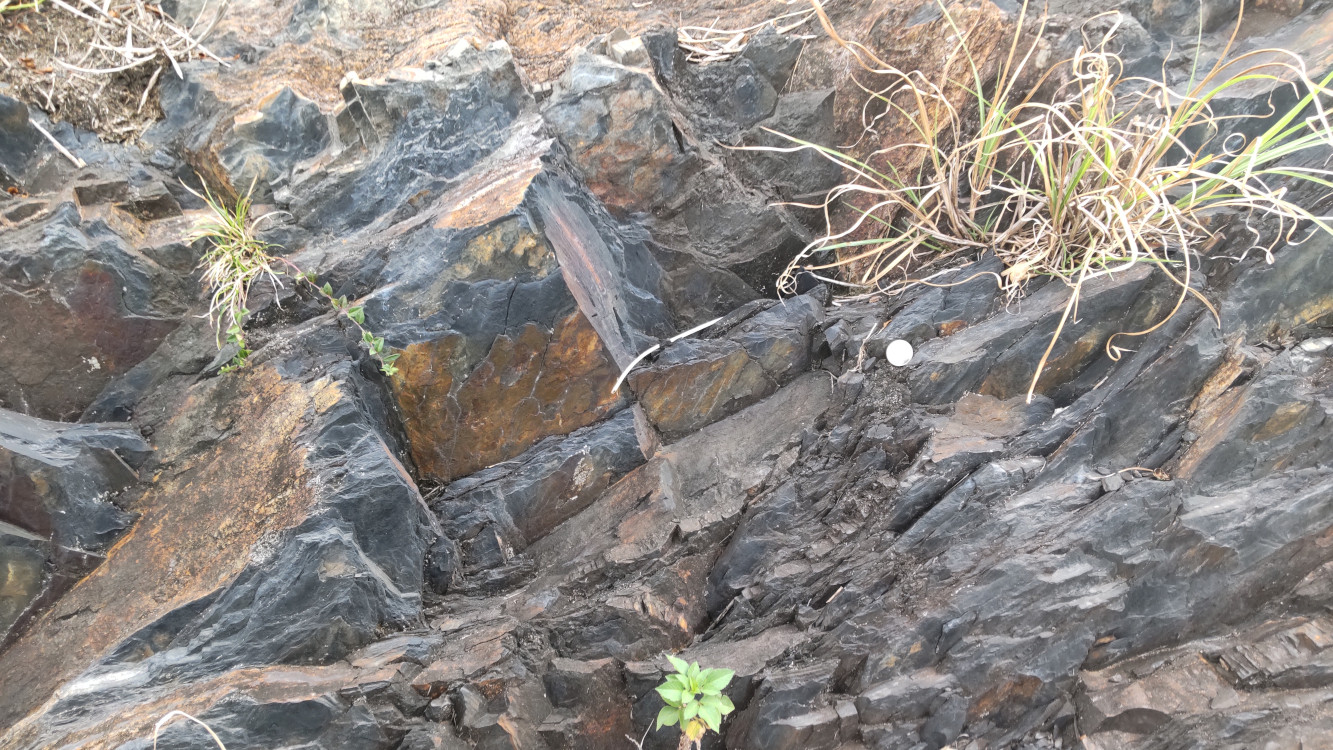
Back at the port where our ship was docked, there was an outcrop of volcanic rock to show what the core granite pushed through. There was a volcano in Yakushima, but it was millions of years ago before the island even existed!
When you have been on as many adventures as I have, it is almost inevitable that tragedy will eventually happen. We can be thankful in this case that it could have been much worse, though on that day there is no way we could have known that. I have experienced the worst case before, and I know the stress of what the leaders of the cruise must have felt.
I think that in a situation like this, the best way to honour our comrade is to continue the mission. He, like everyone else aboard, understood the importance of connecting nature and climate (and corals) to the people. Would he have wanted things to to end in this way? I know that if the situation was reversed, that I would not wish it to be that way.
At the time, I was reminded of the story of Maria Graham, who famously was the first to directly observe that great earthquakes were the cause of raised beaches after experiencing the 1822 Valparaíso earthquake. On her journey to Valparaíso (located in central Chile), tragedy struck as her husband, the captain of the ship she was on, passed away due to illness. When she reached Valparaíso, though devastated by her loss, she decided to stay and observe the events of the civil war that was going on at that time, and to find out about how the local people lived. She felt it was her calling and declined offers to provide passage back to Britain. Her decision led to one of the most important geological observations of the early 19th century. It captured the minds of Charles Lyell and Charles Darwin and influenced the development of modern sea level science.
On this ship, we became family. We shared in that adventure, in both highs and lows. Everything we experienced strengthened our bonds and will lead to amazing things in the future, I am sure.
Understandably, though, we took the rest of the day off.
 Raised Beaches
You must be logged in to post a comment.