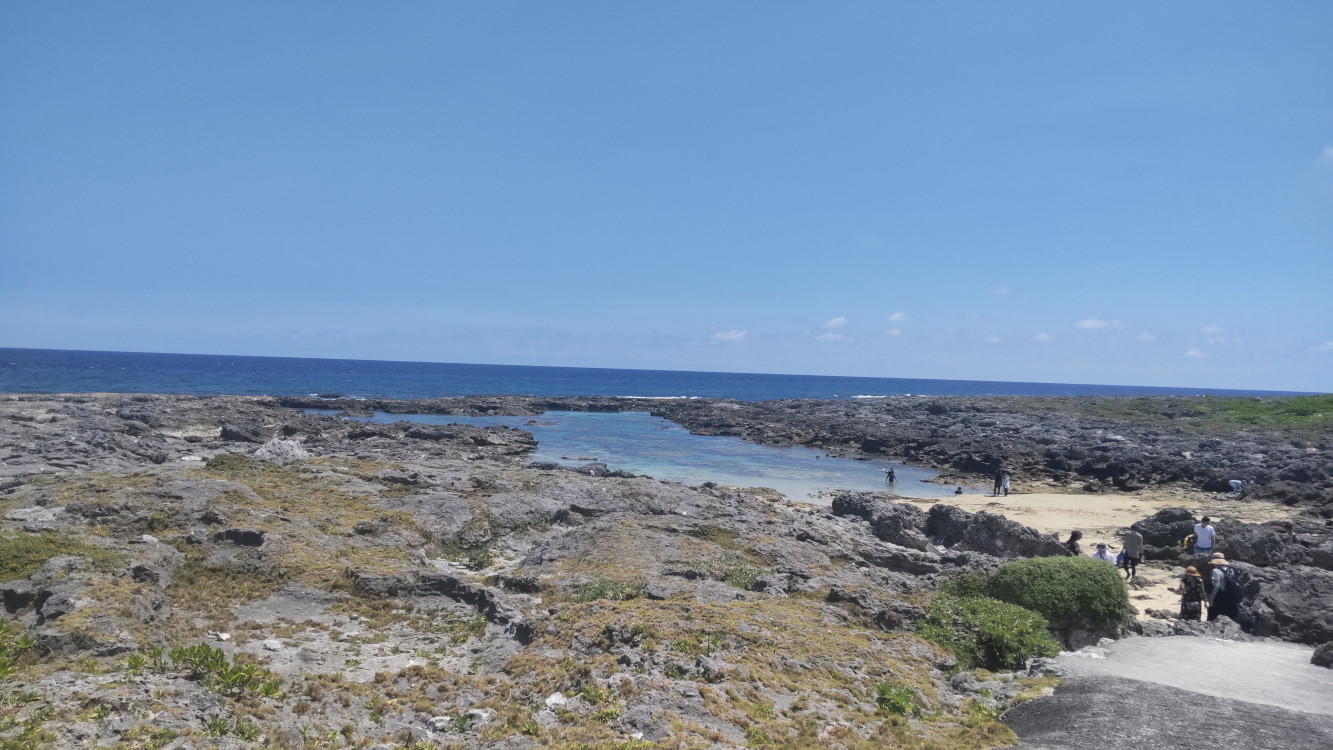
Last year, I posted a number of posts about Kikaijima, an island in Kagoshima in southern Japan (see this one for an overview of Kikaijima). I am happy to say that I will start a new position as a researcher at the KIKAI Institute for Coral Reef Sciences starting next month. I also wrote up about the institute in this post. The institute is a non-profit institute that started 10 years ago, and I have been participating in the activities there since 2021.
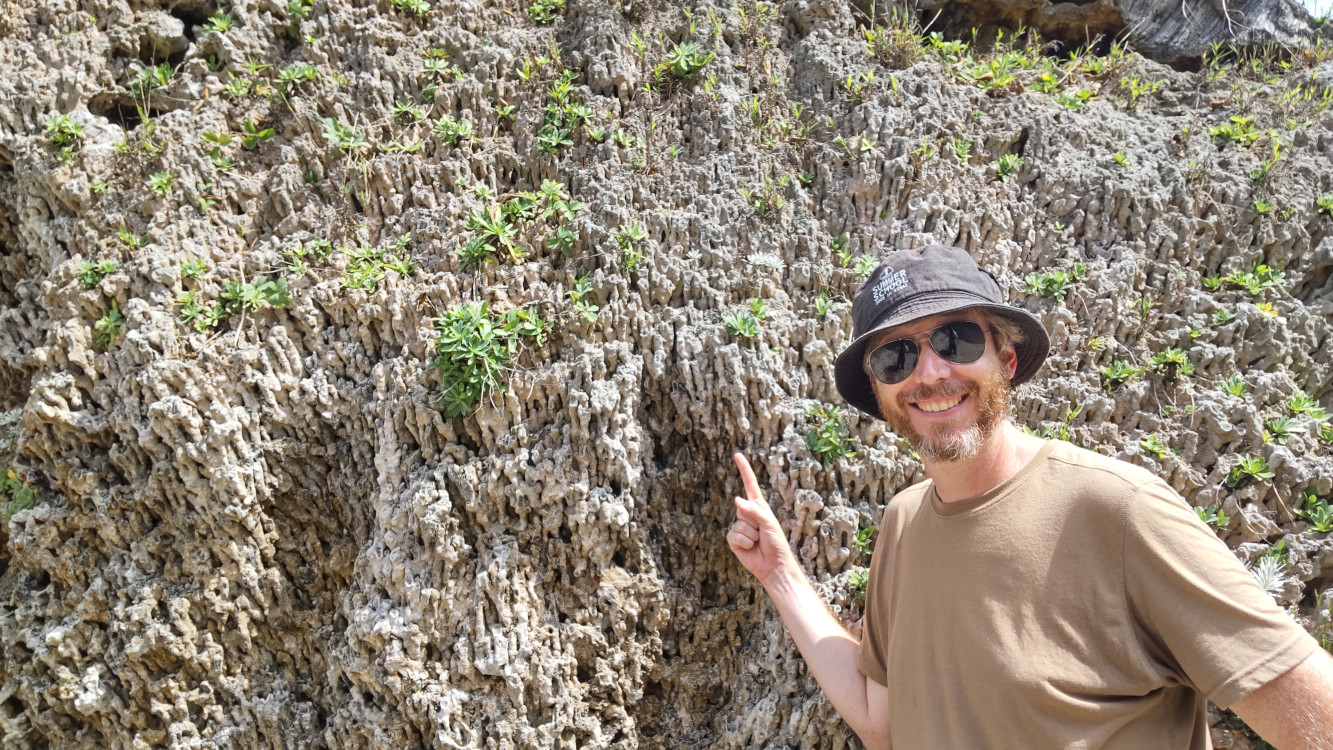
In my new position, I will be working as a researcher at the institute. One of the goals of the institute is to connect the fossil reef deposits on the island to their ability to sequester CO2. I will also be contributing to the educational programs at the institute, where we introduce students to hands-on science projects. I will definitely be learning a lot about the biology of corals! I look forward to working with enthusiastic young scientists. I will hopefully also have a bit of time to work towards my goals of deducing sea level changes during the past 120,000 years, from which Kikaijima might be a key location.
Kikaijima has become a Geopark in Japan, as a result of its rich history as a young, rapidly uplifting island. The reason for creating the geopark is to benefit the residents of the island and the surrounding islands. There are a lot of pressures in Japan with rural depopulation, and it is hoped that the geopark will make the island a tourist destination. We also are hoping to expand the activities that we are doing at the institute to other small islands in southern Japan, which also have coral reefs and an interesting record of fossil corals that might be useful to deduce past sea level.
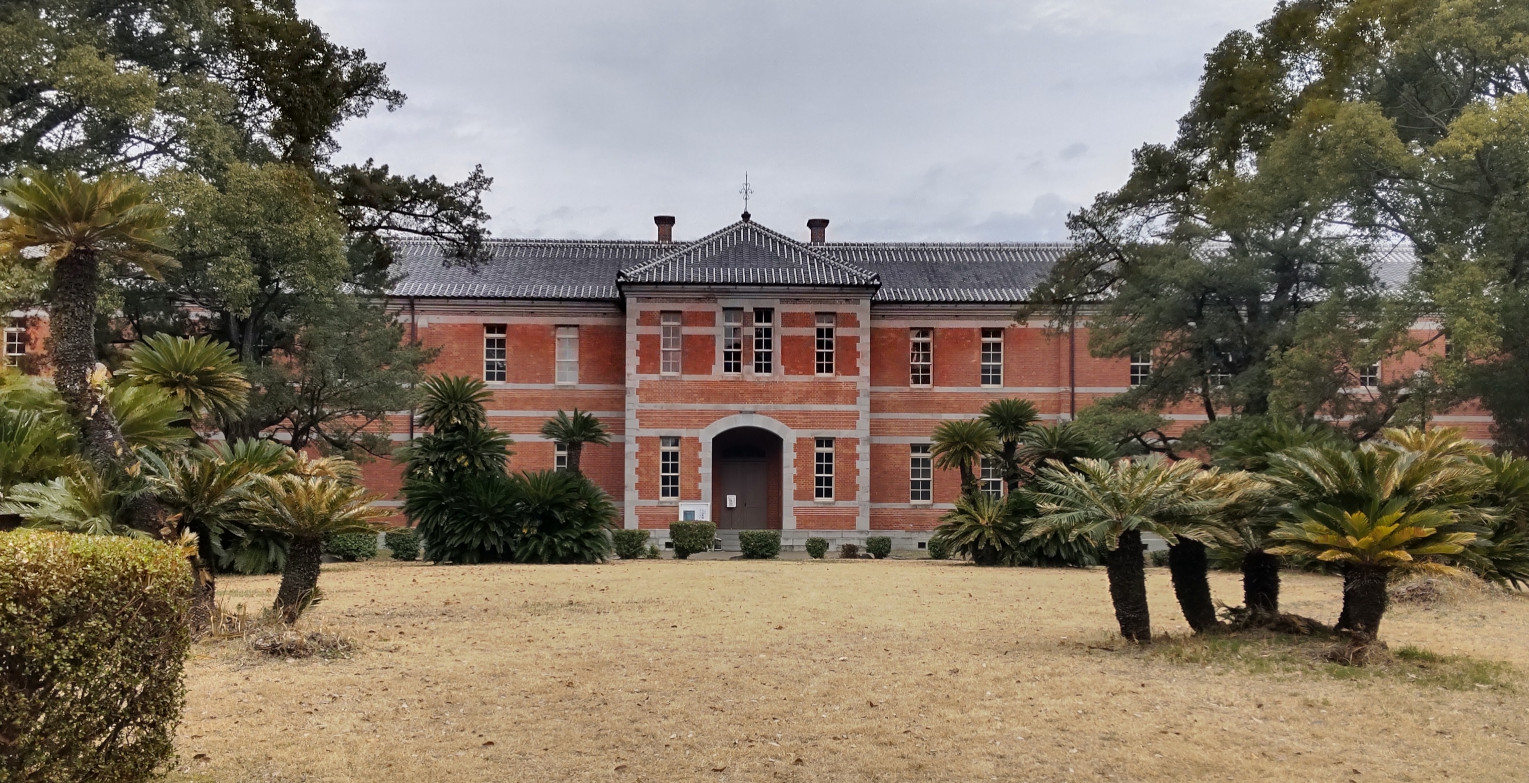
I am excited for my new position, but I thought I would reflect on my time in Kumamoto. I first came to Kumamoto in 2013, while I was still a PHD student. My significant other lives here, so I came many times before finally moving here in June 2021. It was difficult to get here during the Covid Pandemic, but I managed to secure a JSPS Postdoctoral Fellowship for when I arrived. For two years, I worked at Kumamoto University with Dr. Tomohiko Tomita, where we investigated the impacts of sea level change during the Last Glacial Maximum on the climate of Japan. This paper came out a year ago. During my postdoc, I also finished a longstanding project on investigating the the basal conditions of ice sheets that I started back in 2016, and a compilation of last interglacial sea level indicators from glaciated areas of the Northern Hemisphere that I was working on with April Dalton.
After finishing the postdoc, I found myself without a position. To be honest, I needed a break. The impacts of the pandemic had worn me down, and there were various things in my life I needed to deal with. So in many ways, I was not in a big rush to find a new job. I did a lot of travelling and recovered my mind and spirit.
Of course, that couldn’t last forever, and with no luck on the academic research front, I turned to English teaching. I am thankful to my colleague Dr. Jeff Morrow for getting me some work at the Prefectural University of Kumamoto. I taught English to students in the science faculty. I created classes with topics ranging from climate change, natural resources, earthquakes and volcanoes, and global cuisine! This was a great experience for me, as I had never done classroom teaching before. It was interesting to interact with young people, who’s life experience is much different than my own. This year of teaching will serve me well in the future.
I have continued, though slowly, on my own research. I had to face the reality that I was working on research in my spare time, and had to prioritize other things. I have pretty much finished up two studies that I am writing up now, so stay tuned!
Another thing I attempted during the past two years was the Raised Beaches Podcast. I wanted the podcast to be a way to introduce my research interests in paleoclimate and sea level change to a broader audience. I have to admit that it became a bit overwhelming with everything else going on. It was a lot of work to create, record and edit! With all the preparations for teaching I had to do during the past year, it went on the backburner. I will be starting to do the podcast again soon, but probably scaled back a bit. I am going to use it to talk about the activities I do at Kikaijima and to keep abreast on the developments of paleoclimate research.
My new position will have challenges, namely that much of it will be conducted in Japanese! Although I can generally conduct conversations in Japanese, I still struggle with the grammar. Being thrown into a place where there are few English speakers will hopefully force my hand to improve.
The KIKAI Institute for Coral Reef Sciences is a non-profit organization that is not connected to any external institution. As such, I will need to explore ways to expand the institute. I hope that people will come to Kikaijima and I can give an introduction to the natural wonders of the island!
 Raised Beaches
You must be logged in to post a comment.